

Rowan Introduces Faculty-Designed VR Learning Experiences
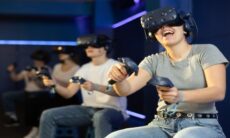
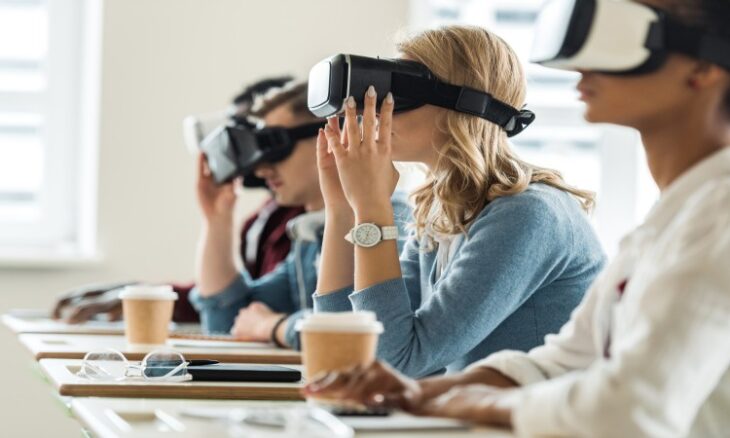
Rowan University is introducing its first faculty-designed immersive learning experiences through the Dreamscape Learn Centre, expanding its use of virtual reality in teaching. The experiences are being developed for Rowan courses and place students in realistic situations where they can apply classroom knowledge, practise decision-making and build skills for real-life challenges.
The Dreamscape Learn Centre began introducing students and faculty to existing Dreamscape Learn experiences last academic year. It is now expanding into content developed specifically for Rowan courses. Under Rowan’s partnership with Dreamscape Learn, immersive content created by Rowan faculty can also be licensed for use by other institutions.
More than 1,000 students enrolled in courses and events that included virtual reality sessions at the immersive learning centre in Campbell Library during its first semester. One course was an introductory biology class for non-STEM majors that used Dreamscape Learn’s Biology in the Alien Zoo experience.
A multiyear study at Arizona State University, where Dreamscape Learn and its first immersive content were developed, found that students using Alien Zoo modules were nearly twice as likely to earn an A in their laboratory course as peers taking part in traditional wet laboratories. The finding relates specifically to the Alien Zoo modules used in that study.
Rowan faculty can also access ready-made immersive content in chemistry, astronomy, art and history. Faculty can add the modules to existing coursework to supplement classroom teaching.
Rowan professors are increasingly involved in creating new immersive experiences and using existing content. Eight offerings are underway in areas ranging from health and wellness to physiology and anatomy. The modules are being developed to be nimble, adaptable and easier to deploy than entire courses.
George Lecakes, PhD, directs Rowan University’s Dreamscape Learn Centre. The centre’s work uses virtual reality as a setting where students can explore situations, make decisions and learn from mistakes in a controlled environment. The experiences are intended to support critical thinking and give students opportunities to examine their responses and decision-making.
Classroom discussion remains a key component of Rowan’s VR content. After each module, students and their instructors can come together to discuss what they experienced. The sessions connect the simulated activity with classroom discussion and allow participants to review the decisions made during the experience.
This semester, all first-year students in the Rohrer College of Business will visit the Dreamscape Learn Centre through the required course How to Succeed in Business School. Hundreds of students will take part in a 22-minute virtual career fair during the autumn semester. The experience is designed to reinforce professional skills and build confidence before students meet employers in person.
The centre is also supporting the development of virtual training for disaster science and emergency management. DeMond Miller, PhD, a professor of disaster science and emergency management, worked with Ronald Roberts, co-director of Rowan’s Centre for Disaster Science, Risks & Community Resilience, and Lecakes’ team to develop CASCADE, or Coordinated Agency Simulation for Catastrophic and Disaster Events.
CASCADE is being offered this semester through Roberts’ elective course Emergency Exercise Design, Implementation & Evaluation. The simulation allows students to coordinate a disaster exercise involving local, state and federal agencies.
The course walks students through the US Department of Homeland Security’s technical manual for designing emergency drills and tabletop exercises. CASCADE adds a virtual place where students can experience and evaluate complex scenarios repeatedly and from multiple perspectives.
Participants can pause a virtual exercise, review their decisions and start again. They can compare outcomes as a group and discuss ways to improve the exercise. The simulation lets students revisit decisions and examine different outcomes within the same training environment.
Roberts holds the International Association of Emergency Managers’ Certified Emergency Manager (CEM) and Master Exercise Practitioner (MEP) credentials. His work with the Dreamscape Learn technology combines emergency exercise design with the repeatable virtual environment provided by CASCADE.
The simulation is also intended for use beyond student coursework. Emergency managers, responders, agencies and partner organisations can use the platform for training, while new scenarios can be added as required.
CASCADE is designed to support situations that may be difficult to reproduce during a real-world class exercise. Virtual environments can support scenarios including conditions such as rainstorms and floods, allowing students to work through those situations without moving an entire class into the physical environment.
Under Rowan’s agreement with Dreamscape Learn, faculty-developed experiences such as CASCADE and the virtual career fair simulation may eventually be made available to other institutions. The arrangement allows Rowan to license content created for its courses beyond the university.
The Dreamscape Learn Centre at Campbell Library opened in spring 2025. Rowan had already spent more than two decades developing expertise in virtual reality research through the Henry M. Rowan College of Engineering.
With support from partners including the US Army, the US Navy, NASA and the National Science Foundation, Rowan researchers have applied immersive technologies to projects ranging from military training to advanced engineering visualisation.
During his doctoral research, Lecakes evaluated 35 VR projects developed at Rowan. The research concluded that immersive technologies provide their greatest value in training and education because virtual environments let users engage with information rather than view it.
Students can practise, experiment, and learn from mistakes in environments designed to mirror real-world situations. Rowan is applying that approach across different areas of teaching, with faculty-developed experiences now being used to build simulations for subjects including business, biology, physiology, anatomy and emergency management.